
I am Tora-kichi, a general japanese. This blog’s contents are about real japanese culture, ideas, tradition, and so on.
I have lived in Japan for more than 30 years. In this article, I will introduce Japanese solidarity responsibilities. A Benefit of reading this article is
- You can understand the Japanese way of thinking of collectiveism
The work exhibition cancellation by the entertainer arrest
https://www.newsweekjapan.jp/stories/world/2019/03/post-11838.php
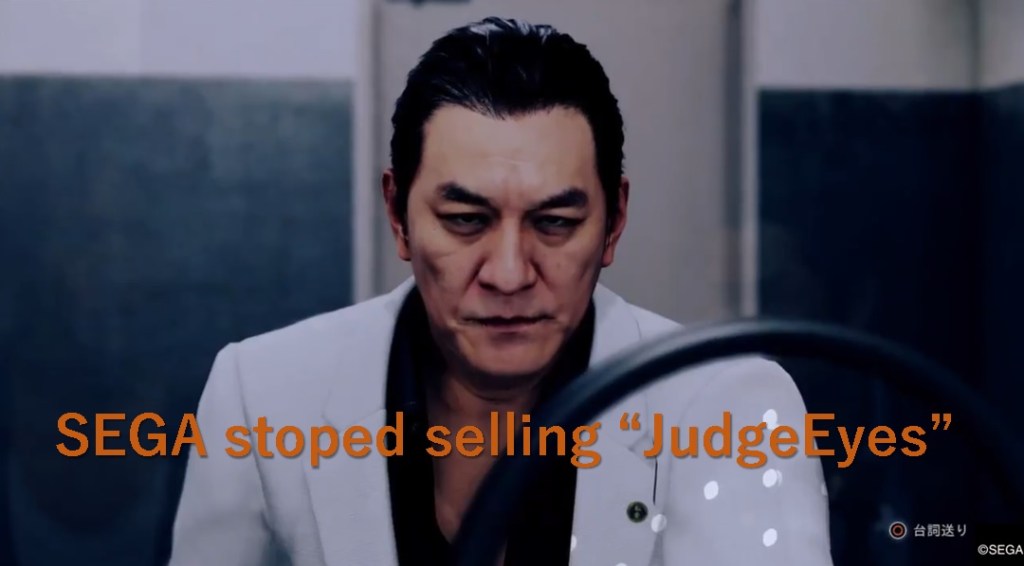
Recently, arrests of entertainers have increased in Japan. There are two main reasons for arrest: drugs or fornication. Not long ago, the actor Arai was arrested for adultery and his appearances were discontinued. And this time, Pierre Taki was arrested by a drug, and “Judge Eyes” was discontinued. Thus, in Japan, when a entertainer is arrested, the release of the movie on which they appear has been discontinued, or the sale of products has been discontinued. The following two points can be mentioned as the reason. The first issue is corporate compliance issues. For example, if a movie company keeps releasing the film of the arrested person, the impression of the company may become worse. Because there is in the culture of solidarity responsibility in Japan. The second is to ask the arrested person for damages. Companies can secure profits by receiving compensation.
On the other hand, some say that it is strange that the work is discontinued for only one arrested person. I also agree with this idea. But this idea is not accepted in Japanese society.
Japanese solidarity culture “Rentaisekinin”

In ancient Japan, it was assumed that there was a system of collective responsibility called ‘renza-sei’. During the Edo period, there was a kind of “joint responsibility system” in the town called “Five-man group” that also served as a mutual monitoring of townspeople. In addition, a system called “Enza”, which extends crime to family members of the family, was conducted mainly by the warrior class, and was gradually extended to the common class. For example, it seems that the system of “Kando” was a system of hardship for fleeing “joint responsibility”, that is to say, the parents and brothers were cut off, for fear that the crime of the prodigal son extended to the parents and brothers. Thus, it seems that the system of solidarity responsibility and its thought were firmly established in Japanese society.
Japanese salary culture “Nenkojoretsu”
There are many systems that are influenced by the idea of solidarity responsibility in modern Japanese society. The seniority order “Nenkojoretsu” is one of the systems. In Japanese companies, excellent people and poor people get almost the same amount of salary. The only factor in determining salary is age. I think that this system was also born from the idea of solidarity responsibility. For example, Nobel prize winner “Shuji Nakamura” invented blue LED when he was enrolled in a Japanese company, but he didn’t get the appropriate salary. The fact that he was then called Slave Nakamura is famous in Japan.
 Pot of Japan